
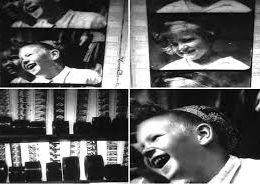
Many documentaries pretend like the camera is not there. The filmmakers try to erase as much of their presence as possible in order to capture the reality around them. This is increasingly prevalent in nature documentaries where they do not want to disturb the wildlife. In “Man with a Movie Camera”, Diziga Vertov turns that idea on its head. Using avant-garde style, Vertov shows the different effect that a camera has when it films every aspect of every life in the cities of Moscow, Kiev, and Odessa. His reimagining of actuality drastically affects how we, the audience, view the narrative. The contrasting images, moments of surrealism, and non-linear structure change the reality that the audience knows.
The instance where juxtaposed images spark the audience is during the sequence of marriage and divorce. These two images are shown within minutes of each other and completely changes the reality that the audience had gotten complacent with. The contrast awakens the audience to understand just how different each life within this city is. While most people we see are walking down the street or riding around in cars, some people are experiencing the happiest moment of their life, marriage. Oppositely, some people are experiencing the worst moment of their life, divorce. Vertov puts these images in with no warning to shock the audience out of their daze.
The editing scenes reimagine our reality and shows that just like a movie, our lives can be cut up and pieced together how we like. Vertov is remaking reality to fit this idea of a movie. As the editing continues, we see a reel of film that turns into the scene portrayed on the reel, demonstrating how easily the audience can slip in and out of entertainment. Our reality can break as easily as cutting through a film strip. Vertov sits in that. He lets the audience feel that weight as we see how similar normal life is to a Hollywood movie.
Non-linear structure is the most obvious element in this film. The entire film has no dialogue, only a soundtrack, and a collection of different images and videos that individually have no relation to one another. However, when you stitch them together like Vertov, an urban symphony releases. The hodge podge of street scenes show many different individuals going about their normal lives and yet, we have no indication of where they are going. Vertov leaves them and cuts to a shot of a surveillance camera overlooking the city. Suddenly, we feel our privacy stolen but then a cut to people in the park calms our panic but still does not carry a story. Vertov lets the emotions and reactions of us individuals in the audience decide what kind of story we see among the images of real life.


Response 2

Watching the Act of Killing and Night and Fog back to back was a great experience. The difference between watching the victim being murdered and then watching the perpetrator relive his cruel actions made me realize one simple truth, no one wins in war.
Starting with Night and Fog, this documentary was made using footage shot in concentration camps in 1955, a decade after they were closed, and intertwined with stock footage from World War II of the Holocaust. The shots are combined together to show the difference between what happened back during the war and how peaceful and overgrown the camps are 10 years later. During the segment where they showed daily life in the camps, there are cuts to those locations in 1955. Compare that to the Act of Killing in which they focus on Anwar Congo and his life in the present. They ask him to recount his work during the Indonesian killings in 1965-1966. The tone of the documentary was more lighthearted and had Congo’s words carry the weight of the murders rather than changing the filter or look of the camera. It showed how the purpotrators of genocide either justified it or were tormented by it but during the murders, they had no regrets. Congo and his accomplices acted out how they would interrogate “communists” until they confessed and then killed them with a wire to prevent blood spills.
Both films do show the anguish that haunts the victims and instigators of violence. In Night and Fog, the juxtaposition of the killing of the Jews with the colorful peaceful emptiness of the abandoned camps. Night and Fog became the most famous war horror documentaries of its time. It has been shown across the world but the comparison of old footage and newer shots impacted everyone who watched it. You compare that to Act of Killing in which they keep the bright colors throughout the entire film. The horror of war comes from interviews of the executioners while they are recreating their exploitations. They are remaking their reign of terror over the people and not showing much remorse for anything they did, besides Anwar Congo. Throughout the documentary, we watch as he begins to reflect upon his actions and realize that he was just as cruel as the communists he killed. He interrogated and tortured them into confessing even though they may not have actually been communists. While the documentaries each use different methods to portray the horror of war, they show how the victims suffered and had to live through these horrible conditions and how most died from it as well as how the perpetrators may not have felt guilty in the moment but as they reflect and look back, they can also recognize how cruel and inhumane they were. This is the horror of war. No one is safe.
Response 3


Reflexive documentaries and participatory documentaries are extremely fun to me because I love the acknowledgement of the camera and the director/filmmaker in the documentaries. I believe it helps the audience not only acknowledge what they see but also understand more about the filmmaker and their vision for the documentary they are making.
During class, we watched Surname Viet, Given Name Nam and discussed how showing the filming process affected our perception of the film. I brought up the question that if the documentary acknowledges the use of actors in their film, is it wrong considering that there are fictional movies that do the same but claim they are “based on a true story”. By bringing this up, I think that the reflexive mode does more to help the audience understand what the director is trying to tell them because it brings them into the creative process behind the film. Nichols mentions that “Realism seems to provide unproblematic access to the world . . . Reflexive documentaries challenge these techniques.” Surname Viet, Given Name Nam shows the audience just how likely it is for them to believe that the people who are speaking to them are the ones who actually lived during the Vietnam War. By adding some poetic techniques and then interviewing the actresses to discuss their motivations, Surname Viet, Given Name Nam dives more into the idea of how we can call attention to the inherent believability that exists within the documentary industry and how little the audience questions it.
In The Gleaners and I, we follow Agnes Varda as she watches the gleaners who scavenge the abandoned food from farms and corporations. This film is amazing because we get a keen insight into the world of Varda and how she views this issue and the people who live it. Reflexive documentaries and participatory documentaries are similar because they both are able to give this insight into the creative process for a documentary that the audience is not used to seeing. The difference is while reflexive films focus on the process, the participatory mode focuses solely on the director and/or cameraman and their views on whatever issue they are filming. This leads to a more individualistic view on issues because you are seeing it through one person’s point of view and their lived experiences instead of addressing the issue as a whole. The Gleaners and I show us the whimsical side of Varda as she playfully catches cars while driving to a potato dumping site to talk with the people there. She is able to help us understand why she cares for these people and what she wants to do to help them during this crisis they are facing.
Both of these modes overlap a lot but it all boils down to whether the filmmaker is commenting on their own work within the filming process and if they show those thoughts and ideas on screen.


Response 4


I have enjoyed these recent documentaries a lot. They are covering very important topics that I think we need to talk about as a society but also recognize as members of the Church of Jesus Christ of Latter-day Saints. Performative documentaries can be defined as a documentary that “freely mixes the expressive techniques that give texture and density to fiction films . . . with oratorical techniques for addressing social issues that neither science nor reason alone can resolve”(Nichols 144). On the other hand, participatory documentaries are where “filmmakers overtly interact with their subjects rather than unobtrusively observe them” (Nichols 159).
The participatory documentary that we saw was Minding the Gap by Bing Liu which told the stories of himself and his childhood friends navigating adulthood while still struggling with the effects of domestic abuse in their childhood homes. Liu is in the documentary talking to his friends, skating around, or conducting interviews as he pieces together this narrative of these young boys. Participatory documentaries are extremely helpful in representing marginalized communities because we get to hear about individuals from the actual communities. We get to hear Kiere talk about his blackness and how that affects traffic stops. We get to hear from Liu’s mother about why she stayed with her abuser instead of leaving. We get to hear all these different and enlightening perspectives and it helps us the audience connect better with the characters. The one downside is that participatory documentaries are really difficult in exploring broad perspectives of an idea. The beauty of participatory is that it is so individualized but we cannot assume that one person’s experience is how everyone experienced it.
Performative documentaries are very engaging because they use similar tricks to fiction films to lure you into the documentary and it works beautifully. We watched the film Paris is Burning which focuses on the experience of gay black men in New York and how the drag/ball scene helped them find communities and families with each other. The documentary was extremely influential in showing this marginalized community because they got to focus on a broader spectrum than Minding the Gap did. The filmmakers looked at the drag scene as a whole and how being gay and black and men affected their poverty levels, their acceptance into society, and their families that they built to support each other. It was done with intricate camera shots capturing the different walks and categories at balls while also interviewing the mothers of different houses and how they looked after their children. By being able to look at the drag scene as a whole, performative documentaries get to highlight the entire marginalized group instead of a few select stories.
While both types of documentaries have good methods to represent different groups on the documentary stage, we also have to ask why that is important. We, as human beings, need to belong. We need somewhere that we can call home and escape from the world. That can be skateboarding with friends or going to a ball and performing with your family. Showing diversity on screen sends a message to the entire audience that they are not alone. There is a family out there waiting for you. It reminds the audience that there are others out there who look like them, speak like them, act like them, and love like them. Representation in film and in documentaries builds hope that even though there is hardship and discrimination out there, “We made ourselves into a people” (Coates 149).


Response 5

Between the World and Me and Paris is Burning are a book and a documentary that demonstrate a point of view that many of us here at Brigham Young University will never experience. They focus on the black experience here in the United States while also talking about the LGBTQIA+ community in New York. As a white, straight, cis-gendered woman, I have never experienced something like what happened in these two pieces of media. I loved learning about different experiences than mine while also acknowledging the struggles that these people experienced.
Between the World and Me hit close to home because it felt like reading a personal diary that a father had written to his son. Coates took us through his experience of being black and living in the United States. One thing that really struck me was how anxious Coates seemed during the whole book. He wanted to emphasize over and over about how aware and self conscious you have to be while being a black person. He brought up things that I as a white woman never thought about. Coates mentioned feeling in a life or death situation every time he was pulled over by a policeman. He talked about how his extended family would talk about making sure that he could physically keep his son in line when his son grew up and Coates was appalled by that. The personal experiences and emotions that Coates brings helps us understand what a black experience is like. It gives the deepest insights and raises his black voice up so we all can hear.
Paris is Burning focuses on both black voices and LGBTQIA+ voices. It focuses on the rise of balls, drag, and “house” culture within New York. Many of the performers were black men who are a part of the LGBTQIA+ community but were shunned by their family or other venues. Houses would take them in and give them a home and a community to express themselves. This is where balls happened. At the ball, people would dress up and compete in different categories to win. While most of the documentary focused on these balls, it also touched on the racism and poverty that these people would face. Since many of them were outcasts from their families or jobs because of their sexuality, they would resort to low level jobs in order to get paid. It is too common to hear a story about a person being rejected from their family because of their sexuality, especially here in Utah and within the LDS church. This film does a great job at bringing these stories to the forefront and demonstrating how the rejection and denial of support forces these groups into impoverished situations. These queens adapted. They started supporting each other and grew into a thriving community and demonstrated how we need to learn about others not like us but also just have empathy for our fellow humans.
These two pieces of media connect because they are both highlighting an experience that gets forgotten in mainstream media. They are advocating for people to hear them and acknowledge them and then to change so that what happened to them or their friends or their family will not happen to others. In order to change our world, we need to continue to talk about the hard stories that make us question what we know about the world.

